Materials we use
British Gypsum Thistle Multi-Finish for standard interior top coats, Board Finish where plasterboard is the substrate, Hardwall on dense masonry, Bonding Coat on smooth or low-suction backgrounds, and Dri-Coat where a re-plaster follows a damp-proof course. Angle beads and stop beads galvanised or stainless as the location dictates; scrim tape self-adhesive on plasterboard joints and hessian scrim where lath-and-plaster meets new work.
Methods and coat build-ups
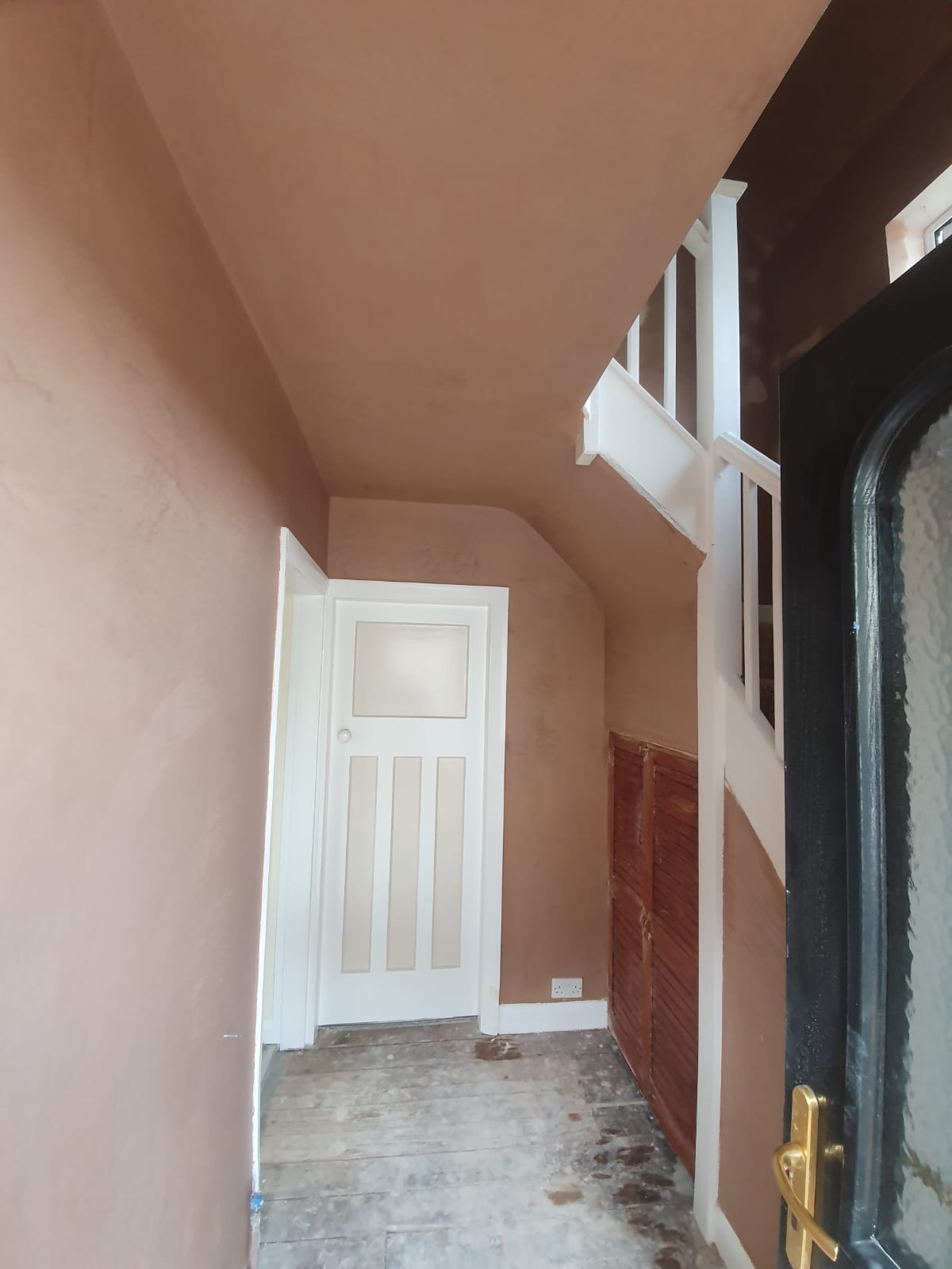
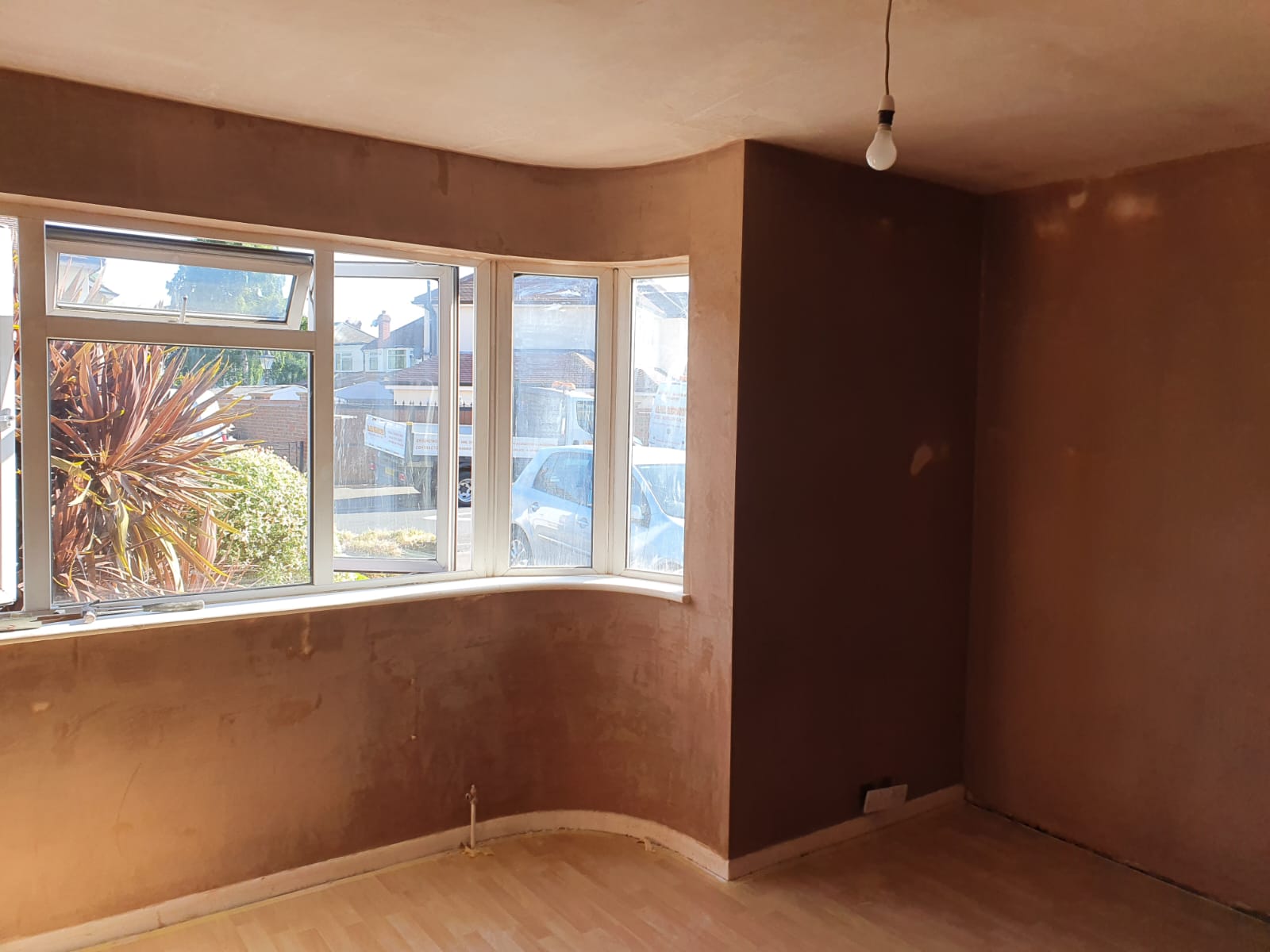
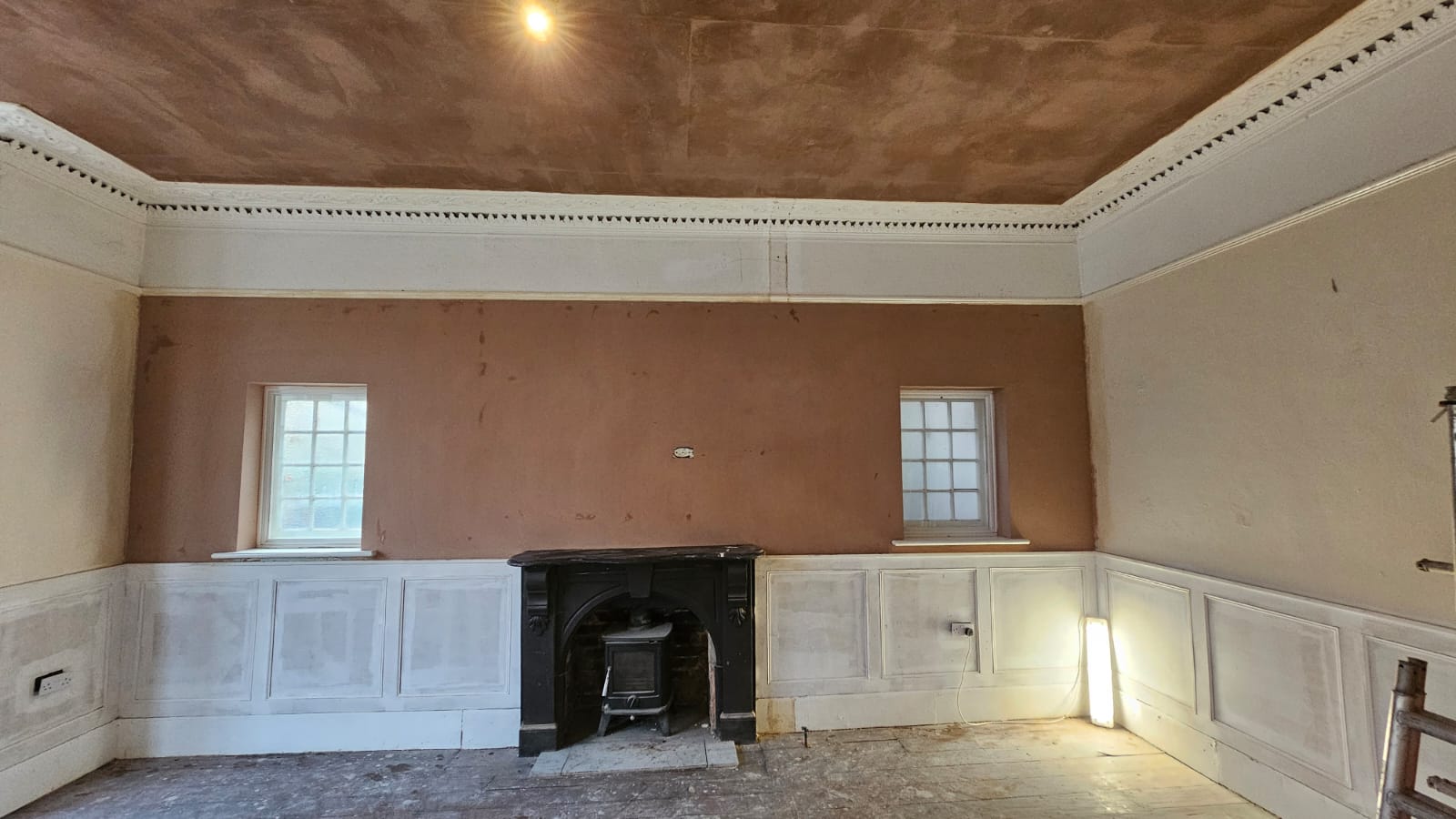
New plasterboard: tape, two-coat skim. Existing sound plaster in good condition: re-skim after a PVA or Blue Grit primer. Bare brick or block: two or three coats of hardwall floated to a devil-float finish, followed by a two-coat skim once the backing is set. Damp-repaired walls: waterproof render up to 1m, salt-neutralising undercoat, then top coat. Ceilings: overboarded onto joists at 400 or 600mm centres, taped, then skimmed — no chasing artex or old lath.
Variations of plastering we cover
Skimming (top-coat only), re-skim (over existing plaster), full re-plaster (strip, back-coat, top-coat), dry-lining (metal or timber studs, insulated board where thermal upgrade is needed), rendering to external walls (sand-cement or K-Rend through-colour), Venetian and polished plaster feature walls, tape-and-jointing for commercial fit-outs, and specialist repairs to lath-and-plaster in period homes.
Situations we handle
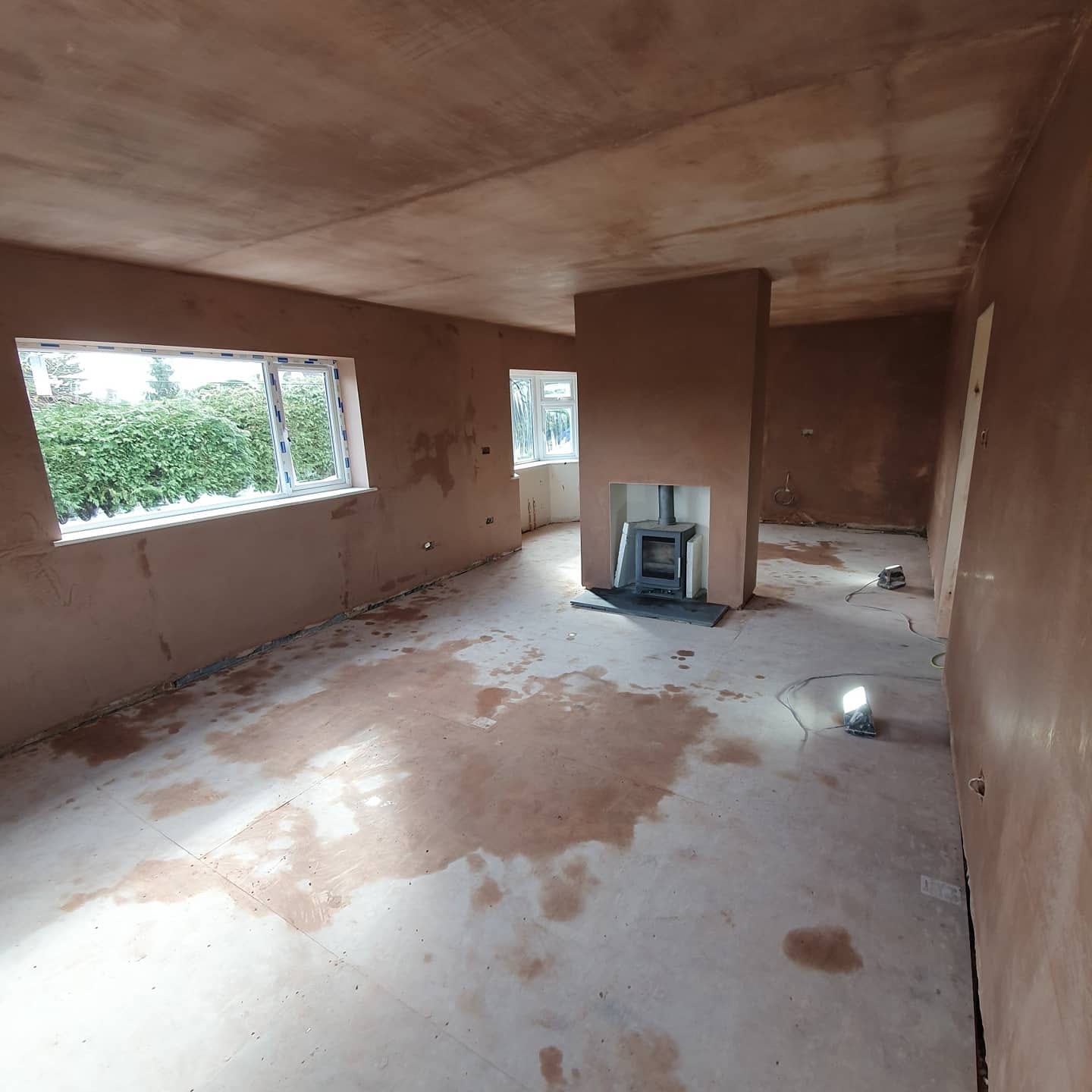
Post-electrical chases and re-wires, plumbing first-fix reinstatement, damp course reinstatement, artex removal by over-board (see Ceilings service), fire-damage repair, extension wall tie-ins, structural opening infills after RSJ installation, and full renovation shells.
Residential vs commercial
Domestic plastering is priced by the room or wall, worked around the household, and finished for direct decoration. Commercial tape-and-joint work follows a programme, requires higher throughput, and is typically finished to level 4 for eggshell paint or level 5 for critical lighting. We do both — the standard doesn't change.